
Spicy Korean Tofu & Kimchi Soup with Mushrooms
Introduction
Spicy Korean Tofu & Kimchi Soup with Mushrooms—known in Korea as Soondubu Jjigae—is a bubbling, fiery bowl of comfort that’s both soul-warming and intensely flavorful. This traditional Korean dish brings together soft tofu, spicy fermented kimchi, and savory mushrooms in a vibrant broth that awakens the senses. Each spoonful delivers a mix of heat, tang, and umami that will leave you craving more.
What makes this soup so special is its depth of flavor despite its simple ingredients. The key lies in the fermented kimchi, whose complex taste deepens as it cooks, mingling beautifully with soft tofu and earthy mushrooms. It’s hearty enough for a meal yet light enough to enjoy any time of day. Whether you’re a fan of Korean cuisine or new to it, this recipe offers an authentic, easy-to-make experience at home—perfect for chilly nights or when you’re in need of something nourishing and bold.
Background and Origins
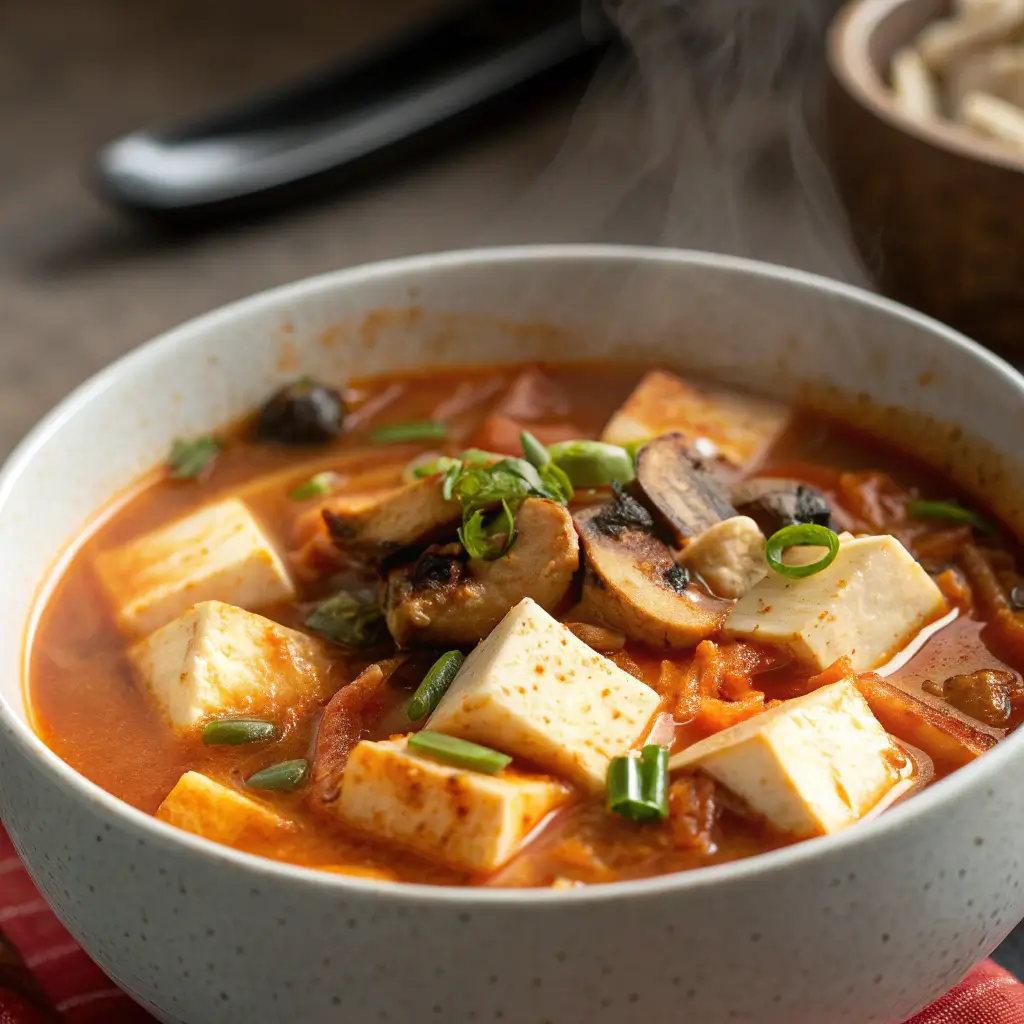
Soondubu Jjigae (순두부찌개) is a beloved staple in Korean households and restaurants. It’s traditionally served piping hot in a stone bowl, often still bubbling when it reaches the table. The word soondubu refers to unpressed tofu—delicate, custard-like, and rich in protein—while jjigae means stew or soup.
This dish’s popularity grew during Korea’s rapid modernization, becoming a comforting meal symbolizing warmth and simplicity. It’s now a global favorite, often served with rice and side dishes (banchan) like pickled radish or seasoned spinach. The combination of fermented kimchi, garlic, gochugaru (Korean chili flakes), and tofu captures the essence of Korean home cooking: balanced, spicy, and deeply satisfying.
Why You’ll Love This Recipe
- Bold and spicy flavor: The rich broth and chili heat are energizing and addictive.
- Quick and easy: Ready in under 30 minutes with pantry staples.
- Naturally vegetarian (and easily vegan): Packed with protein and plant-based goodness.
- Perfect comfort food: A steamy, cozy bowl that warms you from the inside out.
- Customizable: Adjust spice, vegetables, or protein to suit your taste.
Ingredients and Equipment
For the Soup:
- 1 tablespoon sesame oil (15 ml)
- 1 small onion, finely chopped
- 2 cloves garlic, minced
- 1 cup (150 g) kimchi, chopped (preferably well-fermented)
- 1 tablespoon Korean chili flakes (gochugaru)
- 2 teaspoons soy sauce (10 ml)
- 1 tablespoon Korean chili paste (gochujang)
- 4 cups (1 liter) vegetable or chicken broth
- 1 cup (100 g) sliced mushrooms (shiitake, enoki, or button)
- 1 package (300 g) soft or silken tofu, cut into chunks
- Salt, to taste
- 1 green onion, thinly sliced, for garnish
Optional Add-Ins:
- ½ cup (75 g) thinly sliced zucchini or carrots
- 1 teaspoon rice vinegar or a splash of lemon juice for brightness
- Cooked rice, for serving
Equipment:
- Medium pot or Korean stone bowl (ttukbaegi)
- Wooden spoon or ladle
- Knife and cutting board
Pro Tips:
- Use aged kimchi for deeper flavor; fresh kimchi will taste milder.
- If you love heat, add more gochugaru or a sliced fresh chili.
- Use soft or silken tofu—not firm—to achieve that smooth, authentic texture.
Step-by-Step Instructions
1. Sauté the Aromatics
Heat the sesame oil in a pot over medium heat. Add the chopped onion and sauté for 3–4 minutes until translucent. Add minced garlic and cook briefly until fragrant.
2. Add Kimchi and Seasonings
Stir in the chopped kimchi, gochugaru, and gochujang. Cook for 3–4 minutes, allowing the kimchi to soften and release its juices. This step builds the soup’s base flavor.
3. Pour in the Broth
Add the vegetable or chicken broth and bring to a simmer. Scrape the bottom of the pot to loosen any caramelized bits—these add richness to the soup.
4. Add the Mushrooms and Vegetables
Stir in the mushrooms and any optional vegetables like zucchini or carrots. Let them cook for 5–6 minutes until tender.
5. Add the Tofu
Gently add the soft tofu by spooning chunks directly into the pot. Be careful not to stir too aggressively—silken tofu is delicate. Let the soup simmer for another 5 minutes, just enough to warm the tofu through.
6. Season and Adjust
Taste the broth and add soy sauce or salt as needed. For a touch of acidity, add a splash of rice vinegar or lemon juice.
7. Garnish and Serve
Ladle the soup into bowls and garnish with sliced green onions. Serve immediately with a side of steamed rice for a complete meal.
Expert Tips and Troubleshooting
- Too salty? Add a little water or unsalted broth to balance.
- Too spicy? Reduce gochugaru or add extra tofu to mellow the heat.
- Want more body? Simmer the soup longer or stir in a teaspoon of cornstarch slurry for a thicker texture.
- Enhance umami: Add a splash of soy sauce or a pinch of mushroom powder before serving.
Variations and Customizations
- Seafood Soondubu: Add shrimp or small pieces of white fish for a coastal twist.
- Vegetable Power: Include spinach, bok choy, or bean sprouts for extra greens.
- Noodle Version: Add cooked rice noodles to turn the soup into a hearty one-bowl meal.
- Miso-Infused: Stir in a spoonful of miso paste for deeper, earthy notes.
Serving and Presentation Ideas
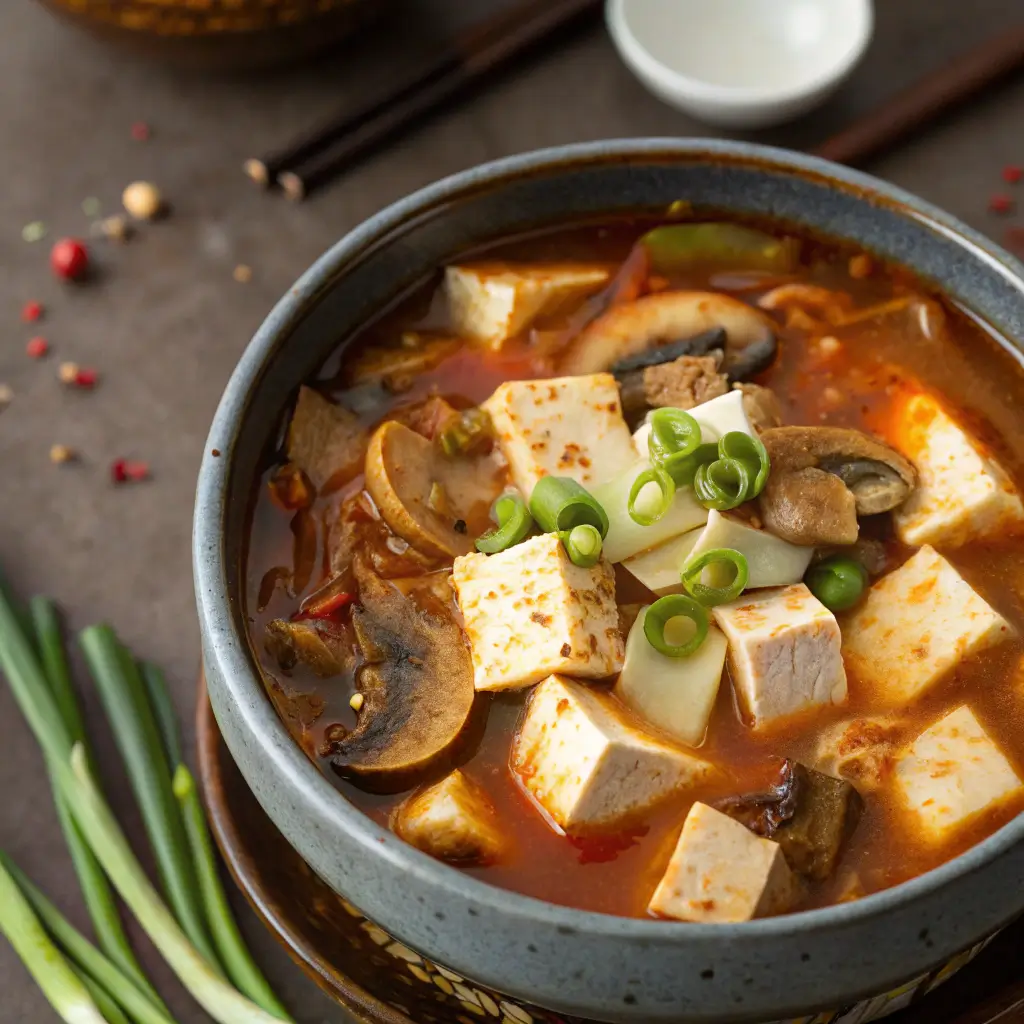
Serve your Spicy Korean Tofu & Kimchi Soup in deep bowls, ideally heated so the soup stays steaming hot. Garnish with sliced scallions, toasted sesame seeds, or a drizzle of sesame oil for an appetizing finish. Pair it with a bowl of short-grain rice, kimchi pancakes (kimchi jeon), or simple pickled cucumbers to balance the spice.
For an authentic experience, bring the soup to the table still bubbling—it’s part of the charm and drama of Korean dining.
Storage and Make-Ahead Tips
- Refrigeration: Store leftovers in an airtight container for up to 3 days.
- Reheating: Warm gently on the stove over medium heat. Add a little broth or water if the soup thickens.
- Freezing: Best avoided due to tofu’s delicate texture, but the broth can be frozen separately for future use.
FAQ
Can I use firm tofu instead of soft tofu?
Yes, but the texture will be different. Soft or silken tofu gives the traditional creamy feel of Korean tofu soup.
Can I make it less spicy?
Absolutely. Simply reduce or skip the gochugaru and use mild kimchi instead of spicy varieties.
Can I use fresh mushrooms only?
Fresh mushrooms work best, but you can use dried shiitake—just rehydrate them first for a more intense flavor.
Conclusion
Spicy Korean Tofu & Kimchi Soup with Mushrooms is a perfect blend of heat, comfort, and nourishment. Each ingredient plays a role in creating a layered flavor profile—from the tang of fermented kimchi to the silkiness of tofu and the earthy bite of mushrooms. It’s a bowl that tells the story of Korean cuisine—balanced, bold, and heartwarming.
Make it once, and you’ll find yourself returning to this recipe whenever you crave something comforting yet exciting. So grab your chopsticks or spoon and dive into this steamy, spicy delight straight from the heart of Korea!