
Root Vegetable “Hash” with Duck Egg & Fresh Herbs: A Rustic Comfort Classic
Introduction
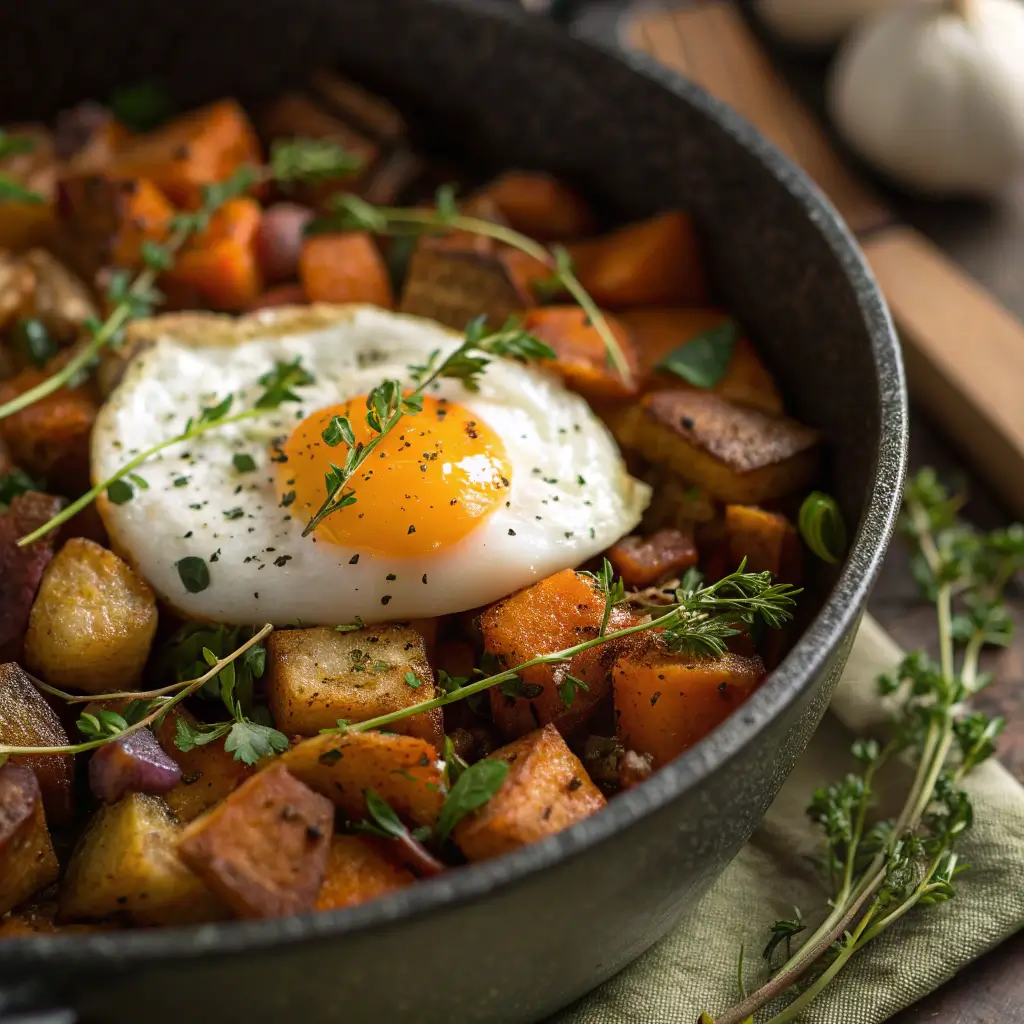
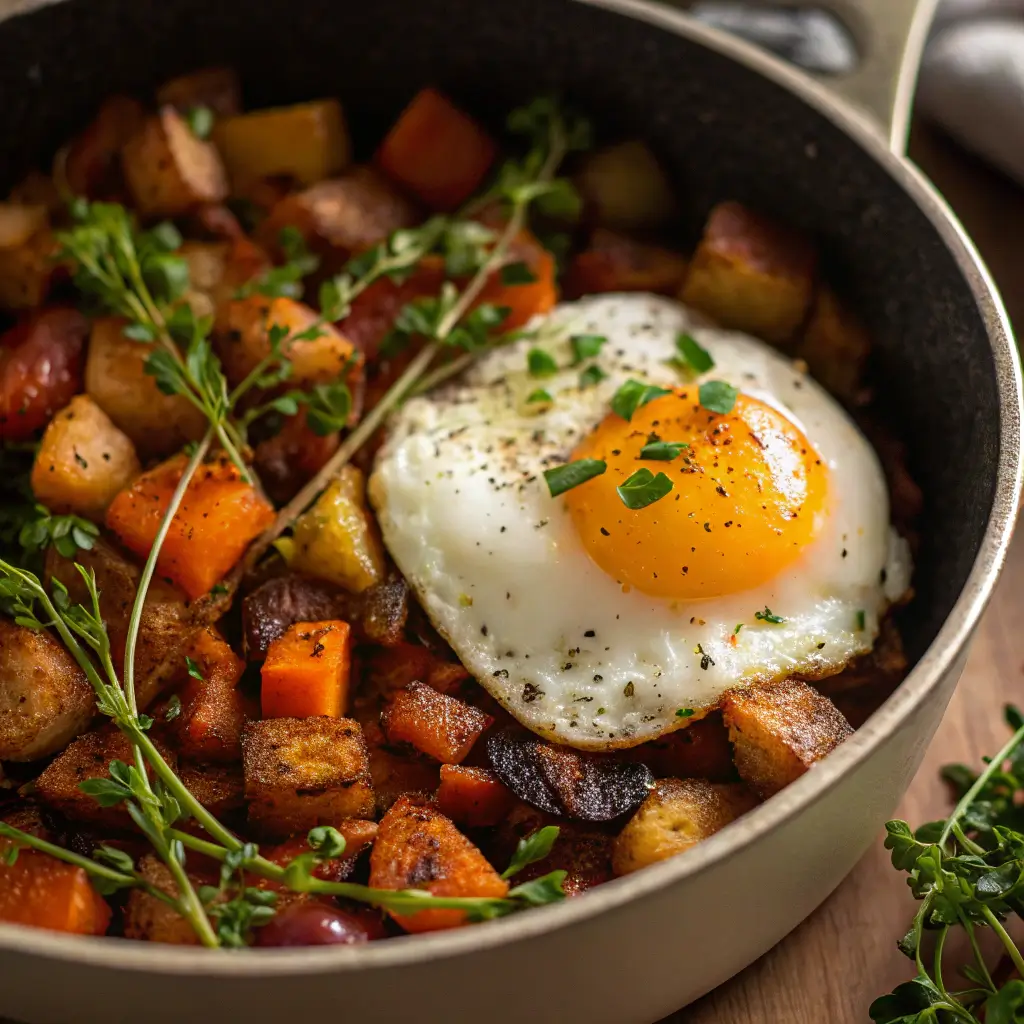
The Root Vegetable “Hash” with Duck Egg & Fresh Herbs is a rustic yet refined dish that celebrates the hearty flavors of the earth. Imagine a skillet filled with golden, caramelized cubes of sweet potato, parsnip, and carrot, kissed by olive oil and herbs — all crowned with a perfectly cooked duck egg whose rich yolk melts luxuriously over the vegetables. It’s the ultimate comfort food, combining simplicity with gourmet flair.
This dish proves that healthy and indulgent can coexist beautifully. The combination of roasted root vegetables brings natural sweetness and depth, while the duck egg, with its buttery yolk, adds richness and satisfaction. Finished with fresh herbs like thyme and parsley, every bite feels grounding yet vibrant.
Whether served for brunch, a cozy lunch, or a light dinner, this hash is an earthy, flavorful reminder that comfort can come straight from the pan — no frills, just honest, seasonal ingredients cooked with love.
The Story Behind the Dish
Hash has humble origins, traditionally created to use up leftover meats and vegetables by pan-frying them together. Over time, it evolved into a beloved comfort dish found in diners, cafés, and home kitchens worldwide. This version takes that humble classic and gives it an elevated, modern twist — trading the typical potatoes and meat for vibrant root vegetables and the luxurious touch of a duck egg.
The duck egg, prized by chefs for its higher fat content and deeper flavor, transforms a simple hash into something restaurant-worthy. Combined with aromatic herbs and caramelized edges, the result is both nourishing and gourmet — a nod to rustic cooking with a touch of sophistication.
Why You’ll Love This Recipe
- Nutrient-packed and flavorful: Root vegetables offer vitamins, fiber, and earthy sweetness.
- Rich, velvety finish: Duck egg yolk adds unmatched creaminess.
- Customizable: Mix and match your favorite seasonal roots or herbs.
- One-pan simplicity: Easy cleanup and fast preparation.
- Perfect for any meal: Ideal for breakfast, brunch, or a cozy dinner.
Ingredients & Equipment
For the Hash
- 1 medium sweet potato, peeled and diced (about 200 g / 7 oz)
- 1 parsnip, peeled and diced (about 100 g / 3.5 oz)
- ½ teaspoon smoked paprika
- 1 carrot, peeled and diced (about 100 g / 3.5 oz)
- 1 small red onion, diced
- Salt and freshly ground black pepper, to taste
- 1 small beet, peeled and diced (optional, for color and flavor)
- 2 tablespoons olive oil
- 1 teaspoon fresh thyme leaves (or ½ teaspoon dried thyme)
For the Duck Egg
- 2 duck eggs (or substitute with large chicken eggs if unavailable)
- 1 tablespoon olive oil or butter
For Finishing & Garnish
- 1 tablespoon chopped fresh parsley
- 1 tablespoon chopped fresh chives
- A sprinkle of flaky sea salt (optional)
- A squeeze of lemon juice (optional, for brightness)
Equipment
- Large nonstick or cast-iron skillet
- Sharp chef’s knife
- Wooden spoon or spatula
- Mixing bowl
Step-by-Step Instructions
Step 1: Prepare the Vegetables
Wash, peel, and dice all the root vegetables into uniform ½-inch cubes to ensure even cooking. Keep the beet separate if you want to avoid staining the other vegetables until the final mix.
Step 2: Sauté the Aromatics
Heat 1 tablespoon of olive oil in a large skillet over medium heat. Add the diced red onion and cook for 3–4 minutes, until softened and slightly caramelized.
Step 3: Cook the Root Vegetables
Add the diced sweet potato, carrot, parsnip, and beet (if using) to the skillet. Drizzle with the remaining olive oil and season with salt, pepper, thyme, and smoked paprika. Stir to coat evenly.
Cover the skillet and cook for 10–12 minutes, stirring occasionally, until the vegetables are tender on the inside and golden-brown on the edges. Remove the lid for the last few minutes to help everything crisp up beautifully.
Step 4: Fry the Duck Eggs
In a separate small pan, heat 1 tablespoon olive oil or butter over medium-low heat. Crack in the duck eggs and cook for 3–4 minutes, until the whites are set but the yolks remain soft and golden. For an over-easy version, gently flip and cook for an additional 30 seconds.
Step 5: Combine & Serve
Spoon the vegetable hash onto serving plates and top each with a duck egg. Sprinkle with fresh parsley, chives, and a light dusting of flaky sea salt. For a fresh contrast, finish with a squeeze of lemon juice or a drizzle of good olive oil.
Pro Tips for Success
- Uniform cuts: Evenly sized cubes ensure all vegetables cook at the same rate.
- Use a cast-iron skillet: It holds heat well, giving vegetables the perfect crisp edges.
- Don’t overcrowd the pan: Too many veggies will steam instead of caramelizing.
- Control your heat: Medium-high for browning, then reduce to medium to soften the centers.
- For extra crispiness: Roast the vegetables in a 400°F (200°C) oven for 20–25 minutes before assembling.
Flavor Variations
- Spicy Hash: Add a pinch of chili flakes or a drizzle of hot sauce before serving.
- Garlic Lovers’ Version: Sauté 2 cloves of minced garlic with the onion.
- Herb Swap: Try rosemary, sage, or dill instead of thyme for different aromatic notes.
- Green Boost: Stir in chopped spinach or kale at the end for color and nutrition.
- Cheesy Finish: Sprinkle with crumbled feta or goat cheese before topping with the egg.
Serving & Pairing Ideas
This hash pairs beautifully with a side salad of arugula and citrus for a light meal, or with crusty whole-grain bread to soak up that golden yolk. For a complete brunch spread, serve alongside freshly squeezed orange juice or herbal tea.
If you want to add a touch of luxury, drizzle the finished dish with herb-infused olive oil or truffle oil for a restaurant-style presentation.
Storage & Make-Ahead Tips
- Refrigerate: Store leftovers in an airtight container for up to 3 days.
- Reheat: Warm in a skillet over medium heat to retain crispness — avoid microwaving if possible.
- Make-ahead: Roast the vegetables ahead of time; simply reheat and top with a freshly fried egg when serving.
- Freezing: Not recommended, as root vegetables may lose texture after thawing.
Frequently Asked Questions
Can I use chicken eggs instead of duck eggs?
Absolutely! While duck eggs are richer, large chicken eggs make an excellent substitute with slightly milder flavor.
Can I use different vegetables?
Yes. Turnips, rutabagas, or potatoes can replace any root vegetables here. The goal is to keep a balance of sweetness and earthiness.
What’s the best oil to use?
Olive oil adds richness, but avocado oil or ghee also work well for high-heat cooking.
How do I make it vegan?
Replace the duck egg with a tofu scramble or chickpea flour “egg.” The hash itself is already vegan-friendly.
Conclusion
The Root Vegetable “Hash” with Duck Egg & Fresh Herbs is proof that wholesome, simple ingredients can create a dish full of depth and satisfaction. Each forkful brings together earthy roots, fragrant herbs, and that luxurious golden yolk — a beautiful harmony of flavors and textures.
Whether you’re making this as a hearty weekend brunch or a nourishing weekday meal, this dish celebrates the essence of seasonal comfort cooking. It’s rustic, nourishing, and effortlessly elegant — the kind of food that warms you from the inside out.