
Pho-Style Beef Noodle Soup with Fresh Herbs: A Bowl of Vietnamese Comfort
Introduction
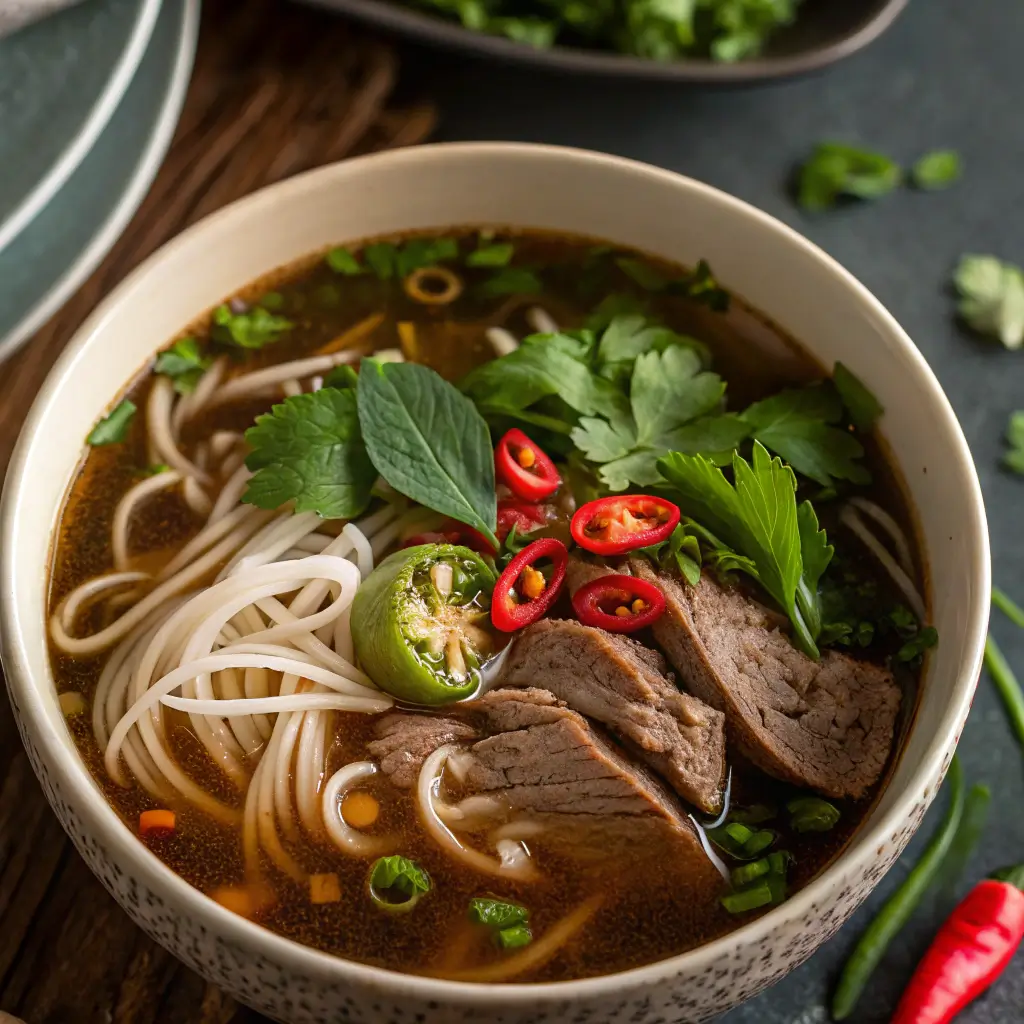
Few dishes can match the soul-warming comfort and aromatic depth of Pho-Style Beef Noodle Soup with Fresh Herbs. This Vietnamese classic, known simply as Phở Bò, is more than just soup—it’s a fragrant, layered experience that engages all the senses. Thin slices of tender beef, silky rice noodles, and a richly spiced broth come together to create harmony in every spoonful.
What makes pho truly special is its balance—savory yet light, aromatic but not overpowering. The broth, infused with cinnamon, cloves, star anise, and charred aromatics, delivers an intoxicating fragrance that instantly transports you to a bustling Hanoi street corner. Topped with fresh herbs, lime, and chili, it’s as customizable as it is comforting.
Whether enjoyed as a hearty meal on a cold evening or a refreshing brunch dish, this Pho-Style Beef Noodle Soup offers the perfect blend of nourishment, warmth, and authentic Vietnamese flavor—all achievable right from your kitchen.
A Bit of History
Pho originated in northern Vietnam in the early 20th century, combining local flavors with French colonial influences. Over time, it evolved into a national treasure, with each region putting its own twist on the recipe. Northern-style pho emphasizes clear broth and subtle flavor, while the southern version features a more aromatic, spiced broth and a wide array of fresh herbs and condiments.
In Vietnamese culture, pho isn’t just food—it’s part of daily life. It’s breakfast, lunch, or dinner. It’s shared among friends and family, a warm welcome for guests, and a symbol of hospitality.
Why You’ll Love This Recipe
- Authentic flavors, simplified for home cooking.
- Aromatic broth simmered with warming spices.
- Customizable toppings to suit every palate.
- Light yet filling, perfect for any season.
- Naturally gluten-free when using rice noodles.
Ingredients & Equipment
For the Broth
- 2 lbs (900 g) beef bones (marrow or knuckle)
- 1 lb (450 g) beef brisket or chuck roast
- 1 large onion, halved
- 3-inch piece of ginger, halved lengthwise
- 3 whole star anise pods
- 1 cinnamon stick
- 4 cloves
- 1 teaspoon coriander seeds
- 1 tablespoon fish sauce
- 2 teaspoons sugar or rock sugar
- 1 tablespoon soy sauce
- 10 cups (2.4 L) water
- Salt, to taste
For the Soup Assembly
- 8 oz (225 g) dried flat rice noodles (bánh phở)
- 8 oz (225 g) thinly sliced raw beef sirloin or flank steak
- 1 cup bean sprouts
- 1 small bunch Thai basil leaves
- 2 green onions, thinly sliced
- 1 small bunch cilantro or culantro
- 1–2 limes, cut into wedges
- 1 fresh red chili, sliced (optional)
- Hoisin sauce and Sriracha, for serving
Equipment
- Large stockpot (6-quart or larger)
- Fine mesh strainer or cheesecloth
- Tongs and ladle
Step-by-Step Instructions
Step 1: Prepare and Roast the Aromatics
Preheat the oven to 400°F (200°C). Place onion and ginger on a baking tray and roast until slightly charred, about 15 minutes. This caramelization adds deep flavor and color to your broth.
Step 2: Blanch the Bones
Bring a large pot of water to a boil. Add beef bones and brisket, boil for 5 minutes to remove impurities, then drain and rinse the bones under cold water. Clean the pot and return the bones and meat to it.
Step 3: Build the Broth
Add 10 cups of water, the roasted onion and ginger, and all the spices (star anise, cinnamon, cloves, coriander seeds). Bring to a boil, then reduce to a gentle simmer. Add fish sauce, soy sauce, and sugar. Simmer uncovered for 2.5 to 3 hours, skimming off any foam or fat as needed.
During the last hour, remove the brisket and slice it thinly once cooled. Continue simmering the bones for a richer broth.
Step 4: Strain and Adjust Seasoning
After simmering, strain the broth through a fine mesh strainer or cheesecloth into a clean pot. Discard the solids. Season the broth with additional salt, fish sauce, or sugar to balance the flavor. The result should be clear, aromatic, and full-bodied.
Step 5: Cook the Noodles
While the broth finishes, cook rice noodles according to package directions until tender but not mushy. Drain and rinse under cool water to stop the cooking process.
Step 6: Assemble the Bowls
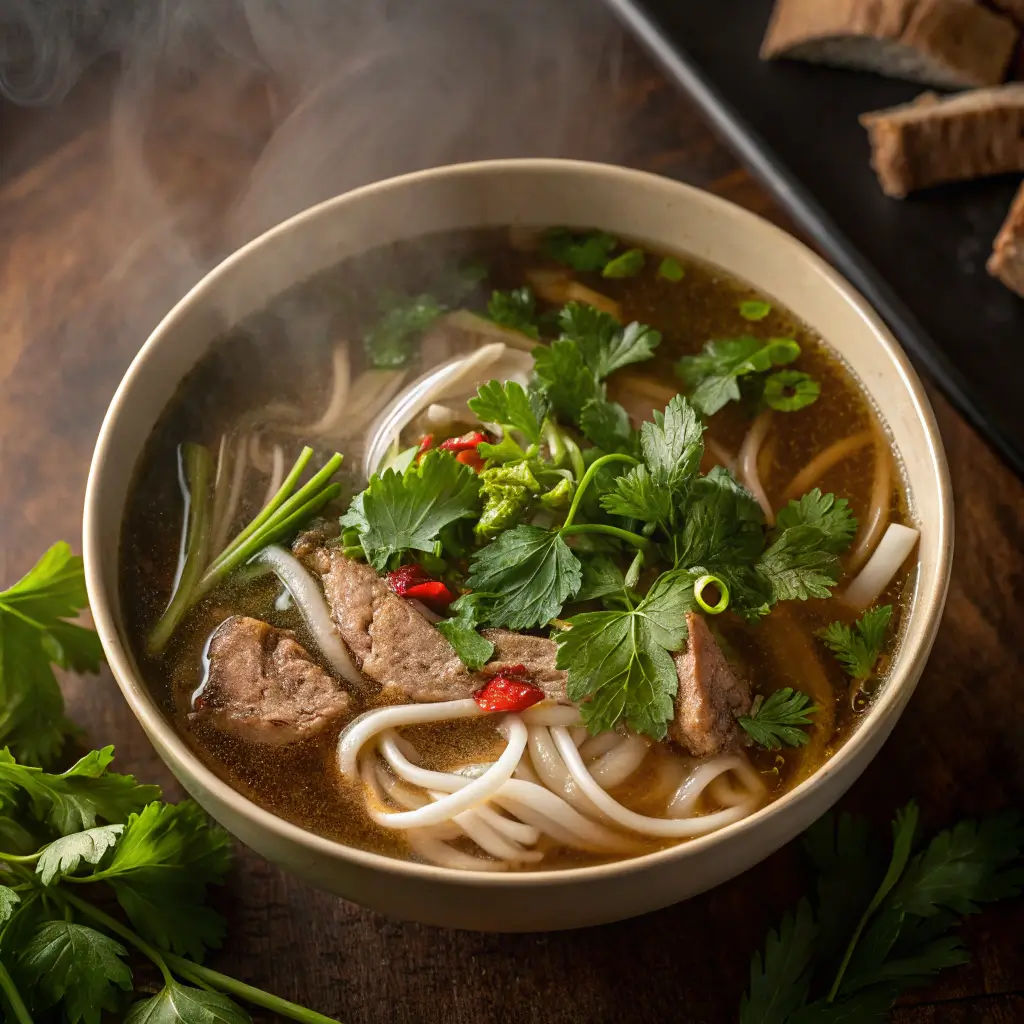
Divide cooked noodles among serving bowls. Arrange thin slices of raw beef and brisket on top. Pour the hot broth directly over the meat — the heat will gently cook the raw beef.
Step 7: Garnish and Serve
Top each bowl with bean sprouts, basil, cilantro, green onions, and chili slices. Serve with lime wedges, hoisin sauce, and Sriracha on the side for personal flavoring.
Expert Tips & Troubleshooting
- Clear broth trick: Blanch bones before simmering to remove impurities for a crystal-clear soup.
- Charred aromatics are key: Don’t skip roasting the onion and ginger — they define pho’s signature taste.
- Thin beef slices: Freeze the meat for 20 minutes before slicing; this ensures thin, even pieces that cook perfectly in hot broth.
- Control saltiness: Always taste before adding more fish sauce or soy sauce; pho should be balanced, not overly salty.
- Make it richer: Add a few marrow bones for a deeper, silkier texture.
Variations & Customizations
- Chicken Pho (Phở Gà): Substitute beef bones with chicken bones and sliced chicken breast.
- Vegetarian Pho: Use vegetable broth with charred onions, mushrooms, and tofu slices.
- Spicy Pho: Add crushed chili flakes or chili oil for extra heat.
- Quick Pho: Use store-bought beef stock simmered with spices for 45 minutes instead of 3 hours.
- Herb Explosion: Add mint or Thai coriander for a brighter, more complex aroma.
Serving Suggestions
Pho is best enjoyed fresh and hot, served with a tray of toppings — bean sprouts, lime, herbs, and sauces. Encourage diners to customize each bowl to their taste, adding more herbs for freshness or chili for spice. Pair your pho with Vietnamese iced coffee or jasmine tea for an authentic experience.
Storage & Make-Ahead Tips
- Refrigerate broth separately from noodles for up to 4 days. Reheat gently before serving.
- Freeze broth for up to 3 months — just thaw overnight in the fridge.
- Cook noodles fresh: They tend to become mushy if stored in liquid.
- Meal prep option: Keep herbs and garnishes separate to maintain freshness.
Health Benefits
Pho isn’t just delicious — it’s nutritious and restorative. The slow-simmered broth is rich in collagen, minerals, and amino acids that support joint and gut health. Fresh herbs like basil and cilantro provide antioxidants, while lime adds vitamin C. Rice noodles keep it naturally gluten-free, making it light and easily digestible.
Frequently Asked Questions
Can I make the broth in an Instant Pot?
Yes. Pressure cook bones and aromatics on high for 1 hour, then strain and season. It won’t be quite as complex as traditional simmering, but it’s a great time-saver.
Can I reuse the bones?
Yes. Many cooks reuse bones for a second, lighter broth called pho tái nhạt—ideal for quick lunches.
Is pho healthy?
Absolutely. It’s high in protein, low in fat, and packed with nutrients from herbs and spices, making it a wholesome and balanced meal.
Conclusion
Pho-Style Beef Noodle Soup with Fresh Herbs is more than a meal—it’s a sensory journey through Vietnamese tradition. Each bowl tells a story of care, patience, and harmony, from the fragrant broth to the bright burst of herbs and lime.
Making pho at home may take time, but the reward is incomparable—a perfectly balanced soup that comforts the body and soothes the soul. Once you try it, it’s sure to become a go-to favorite for family dinners or cozy weekends. Gather your ingredients, embrace the aroma of simmering spices, and experience the timeless magic of pho in your own kitchen.