
Miso Soup with Tofu, Seaweed & Scallions: A Traditional Japanese Comfort
Introduction
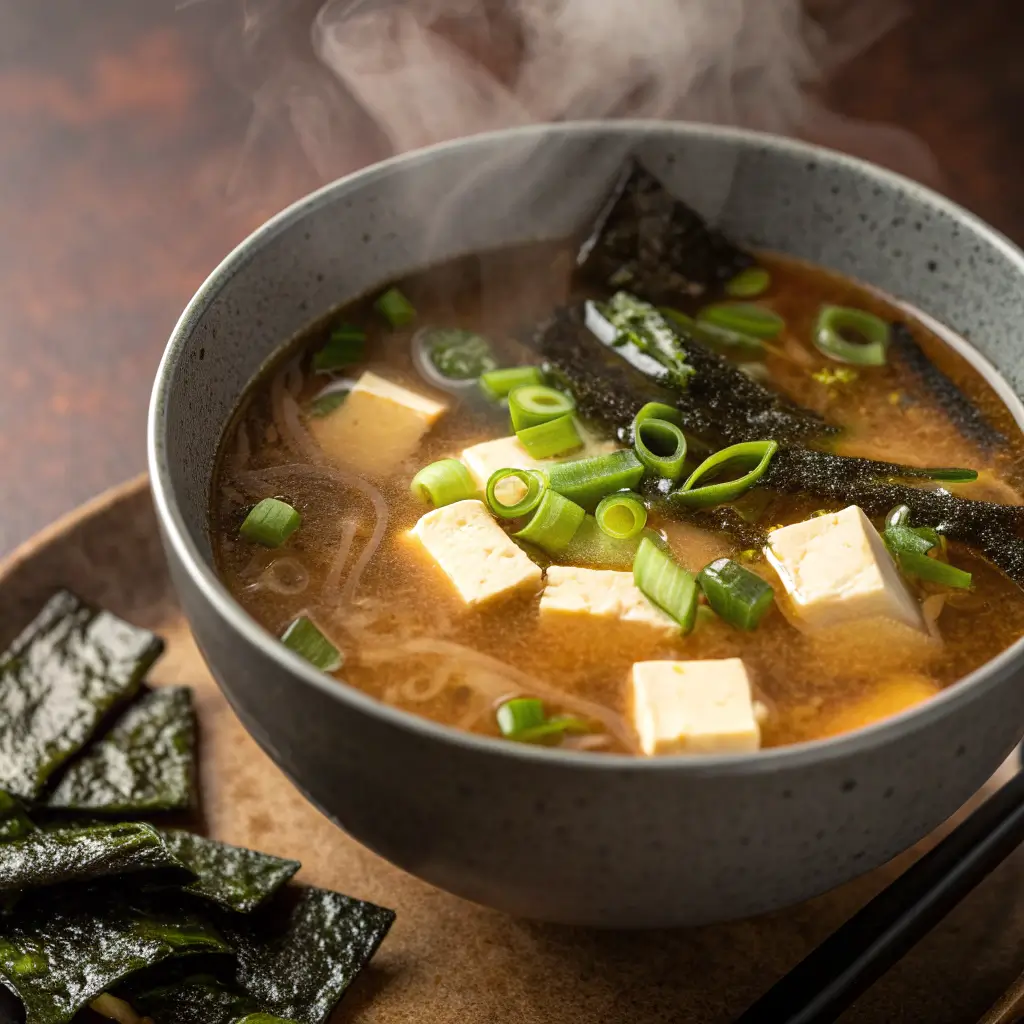
Miso Soup with Tofu, Seaweed & Scallions is a classic Japanese dish renowned for its simplicity, nourishment, and delicate umami flavor. This warm, comforting soup combines silky tofu, tender seaweed, and crisp scallions in a flavorful miso broth. It’s perfect as an appetizer for Japanese-inspired meals, a light lunch, or a soothing dinner on a cool evening.
The beauty of miso soup lies in its balance: the miso paste provides a savory depth, tofu adds gentle protein, seaweed delivers subtle briny notes, and scallions give a fresh, crisp finish. Despite its simplicity, this soup is packed with nutrients, including vitamins, minerals, and probiotics from miso. Its light yet satisfying nature makes it a versatile dish suitable for both solo meals and family dining.
Background and Inspiration
Miso soup has been a staple of Japanese cuisine for centuries, traditionally served as part of breakfast, lunch, or dinner. Miso, a fermented soybean paste, provides the signature umami taste, while dashi—a broth made from seaweed and fish—forms the base. Modern versions often adapt dashi using plant-based ingredients for a vegetarian-friendly option.
Tofu, a source of plant-based protein, and wakame seaweed, rich in iodine and minerals, make this soup both nourishing and filling. Scallions are commonly added at the end for freshness and color. The combination of these ingredients highlights the Japanese culinary philosophy of simple, seasonal, and balanced meals.
Why You’ll Love This Recipe
- Quick and easy: Ready in 15–20 minutes with minimal ingredients.
- Healthy and nourishing: Packed with protein, vitamins, minerals, and probiotics.
- Plant-based friendly: Naturally vegan when using vegetable-based dashi.
- Customizable: Adjust miso type, tofu, or add vegetables for variety.
- Light yet satisfying: Perfect as an appetizer or a full light meal.
Ingredients & Equipment
For the Soup
- 4 cups dashi stock (vegetable or kombu-based for vegan version)
- 3 tablespoons miso paste (white or yellow miso recommended)
- 1 cup firm tofu, cut into small cubes
- 2 tablespoons dried wakame seaweed, rehydrated in water
- 2 scallions, thinly sliced
- Optional: sliced mushrooms, spinach, or shredded carrots for extra flavor and texture
Equipment
- Medium pot
- Ladle
- Wooden spoon
- Small bowl for dissolving miso
Pro Tips:
- Use white miso for a mild, slightly sweet flavor, or red miso for a deeper, saltier taste.
- Dissolve miso paste in a small amount of warm broth before adding to the soup to avoid clumps.
- Avoid boiling the soup after adding miso to preserve probiotics and delicate flavor.
Step-by-Step Instructions
Step 1: Prepare the Dashi Broth
Heat the dashi stock in a medium pot over medium heat. If using dried kombu or shiitake for a vegan version, simmer gently for 5–10 minutes to extract flavor.
Step 2: Rehydrate Seaweed
Soak dried wakame seaweed in water for 5–10 minutes until softened. Drain and set aside.
Step 3: Add Tofu
Cut tofu into small cubes and gently add to the simmering broth. Allow to heat through for 2–3 minutes.
Step 4: Dissolve Miso Paste
In a small bowl, dissolve miso paste with a ladle of warm broth. Stir the miso mixture back into the pot, ensuring it is well incorporated. Do not boil the soup after adding miso to preserve its beneficial properties.
Step 5: Incorporate Seaweed and Scallions
Add the rehydrated wakame and sliced scallions. Simmer gently for 1–2 minutes until everything is warmed and well combined. Taste and adjust seasoning as needed.
Step 6: Serve
Ladle soup into bowls and serve immediately. Optional garnishes include a sprinkle of sesame seeds or additional scallions. Serve alongside rice or as a starter to a Japanese-inspired meal.
Expert Tips & Troubleshooting
- Avoid boiling miso: Boiling miso can destroy delicate flavors and probiotics. Add it at the end over low heat.
- Texture balance: Use firm tofu for a cleaner texture; silken tofu may break apart easily.
- Flavor depth: Add a splash of soy sauce or a few drops of sesame oil for extra umami.
- Storage: Best enjoyed fresh, but can refrigerate for up to 1 day; reheat gently without boiling.
Variations & Customizations
- Vegetables: Add mushrooms, spinach, shredded carrots, or baby bok choy for more texture and nutrition.
- Spices and flavors: Include ginger slices, garlic, or chili flakes for an extra kick.
- Protein boost: Add edamame or small amounts of cooked soba noodles for a heartier soup.
- Miso types: Try combining white and red miso for a balanced, complex flavor.
Serving & Presentation Ideas
Serve Miso Soup with Tofu, Seaweed & Scallions in small bowls to showcase the vibrant green of scallions and the soft white tofu cubes. Pair with sushi, rice, or steamed vegetables for a complete Japanese-inspired meal. The combination of warm broth, tender tofu, and fresh scallions makes it visually appealing and comforting.

Storage & Make-Ahead Tips
- Refrigerate: Store in an airtight container for up to 24 hours; add miso fresh before serving if storing.
- Reheat: Warm gently over low heat, stirring occasionally; do not boil.
- Meal prep: Prepare dashi stock in advance for quick weeknight soup preparation.
FAQ
Can I use instant miso paste?
Yes, just ensure it is dissolved in a small amount of warm broth before adding to the soup.
Can I make this soup vegan?
Absolutely. Use vegetable-based dashi or kombu and shiitake stock.
Can I freeze miso soup?
Freezing is not recommended, as the tofu texture and miso flavor can degrade.
Conclusion
Miso Soup with Tofu, Seaweed & Scallions is a nourishing, flavorful, and easy-to-make Japanese soup perfect for any occasion. Light, yet packed with protein, vitamins, and probiotics, it provides comfort and satisfaction in every spoonful.
Ideal as a starter, a light meal, or part of a Japanese-inspired dinner, this soup is versatile, healthy, and beautifully balanced. Its delicate umami flavor and vibrant ingredients make it a must-try recipe for anyone seeking a quick, nutritious, and comforting dish.