
Duck Breast with Pomegranate Glaze Sauce – A Sophisticated Sweet and Savory Delight
Introduction
Elegant, flavorful, and surprisingly simple to make, Duck Breast with Pomegranate Glaze Sauce is a restaurant-quality dish you can recreate in your own kitchen.
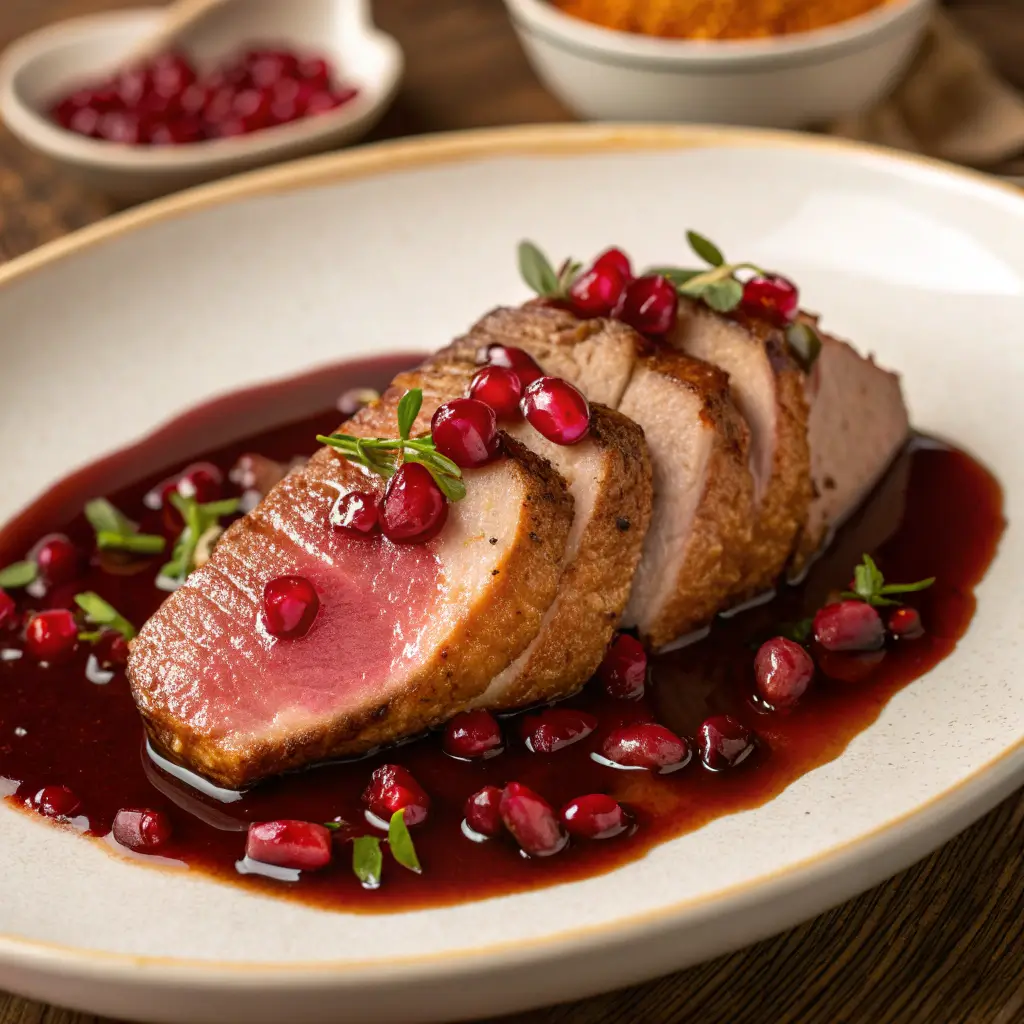
This recipe celebrates balance—crispy, golden duck skin paired with tender, juicy meat, all brought together by a glossy, tangy-sweet pomegranate glaze. Every bite feels like a celebration of rich flavors and refined textures.
Pomegranate, often considered a symbol of abundance and prosperity, adds a naturally vibrant sweetness and a jeweled finish to the dish. The glaze beautifully complements the savory richness of duck, cutting through its fattiness with bright acidity. Best of all, this meal comes together in under an hour, making it ideal for a romantic dinner, festive gathering, or any special occasion where you want to impress without the stress.
Why This Recipe Works
- Perfectly balanced flavors — the sweetness of pomegranate contrasts beautifully with the savory duck.
- Crispy skin and juicy interior — a simple sear-and-roast technique ensures perfection.
- Elegant yet approachable — easy enough for weeknights, stunning enough for celebrations.
- Rich in antioxidants from pomegranate and packed with protein from duck.
- Naturally gluten-free, with no need for complicated substitutions.
A Brief Background
Cooking duck has long been associated with French and Asian culinary traditions, both of which value the contrast of crispy textures and bold sauces. The pairing of duck and fruit is classic—think orange, cherry, or plum. This modern twist using pomegranate brings a fresh brightness to the plate, nodding to Mediterranean and Middle Eastern influences where pomegranate molasses is often used to enhance savory dishes.
The result is a harmonious blend of cultures on one plate—refined, festive, and full of character.
Ingredients
For the Duck
- 2 duck breasts (about 350–400 g / 12–14 oz each)
- 1 teaspoon salt
- ½ teaspoon freshly ground black pepper
- 1 teaspoon fresh thyme leaves
- 1 tablespoon olive oil
For the Pomegranate Glaze Sauce
- ½ cup (120 ml) pomegranate juice (unsweetened)
- 2 tablespoons pomegranate molasses or thickened juice
- 1 tablespoon balsamic vinegar
- 1 small shallot, finely minced
- 2 tablespoons honey or maple syrup
- 1 teaspoon Dijon mustard
- 1 tablespoon unsalted butter (optional, for richness)
- Salt and pepper, to taste
For Garnish (Optional)
- Fresh pomegranate seeds
- Sprigs of thyme or parsley
- Extra drizzle of glaze
Equipment
- Sharp knife for scoring
- Heavy skillet (cast iron preferred)
- Small saucepan
- Meat thermometer
Step-by-Step Instructions
1. Prepare the Duck
Remove the duck breasts from the refrigerator about 20 minutes before cooking to allow them to reach room temperature. This ensures even cooking.
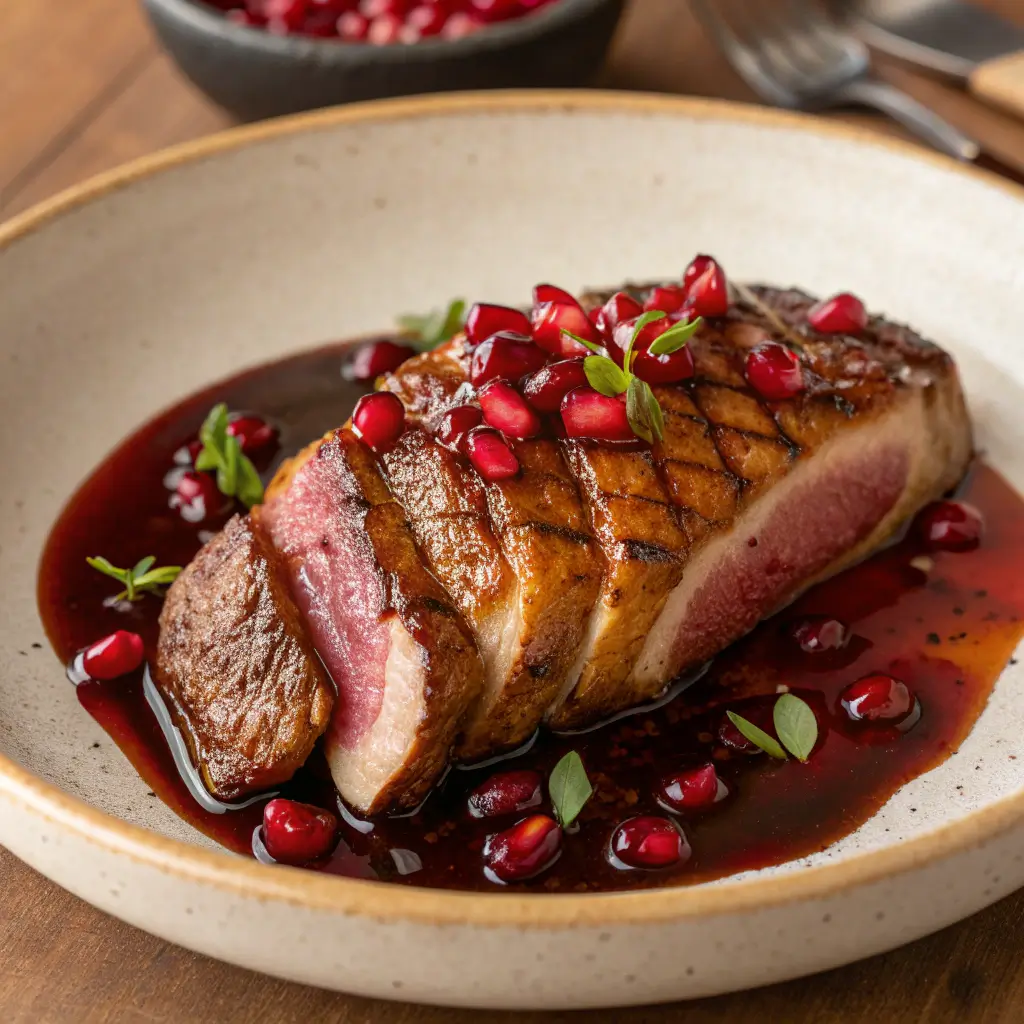
Pat the duck dry with paper towels—moisture will prevent crisping. Using a sharp knife, score the skin in a crosshatch pattern without cutting into the meat. Season both sides with salt, pepper, and thyme.
2. Render the Fat and Crisp the Skin
Place the duck breasts skin side down in a cold skillet—starting cold helps the fat render gradually, giving you perfectly crisp skin. Turn the heat to medium and cook for about 8–10 minutes, until the skin is deeply golden and much of the fat has rendered out. Spoon out excess fat occasionally, saving it for roasting vegetables or potatoes later.
Once the skin is crisp, flip the breasts and cook the meat side for 2–3 minutes to sear.
3. Finish in the Oven
Transfer the skillet to a preheated oven at 200°C (400°F) and roast for 5–7 minutes, depending on thickness, until the internal temperature reaches 57–60°C (135–140°F) for medium-rare.
Remove from the oven, tent loosely with foil, and rest for 10 minutes—this step allows the juices to redistribute, keeping the duck tender and succulent.
4. Make the Pomegranate Glaze
While the duck rests, prepare the glaze. In a small saucepan, heat a teaspoon of the rendered duck fat or olive oil over medium heat. Add minced shallot and sauté for about 1–2 minutes until soft and translucent.
Pour in the pomegranate juice, pomegranate molasses, honey, and balsamic vinegar. Whisk in the mustard and bring to a gentle simmer. Reduce for 5–7 minutes until thickened and glossy.
Finish by whisking in the butter (if using) to add a silky texture. Taste and adjust seasoning with salt and pepper.
5. Slice and Serve
Slice the rested duck breasts diagonally into thin medallions. Arrange on a warm plate, drizzle generously with the pomegranate glaze, and garnish with fresh pomegranate seeds and herbs for a burst of color.
Expert Tips for Perfect Duck
- Score carefully: Shallow cuts help the fat render without piercing the meat.
- Start in a cold pan: This method gives you extra-crispy skin while preventing burning.
- Don’t overcook: Duck breast is best served medium-rare for a tender texture.
- Let it rest: Cutting too early will release the juices and dry out the meat.
- Use the rendered fat: It’s liquid gold for cooking vegetables, potatoes, or even eggs.
Serving Suggestions
This elegant main pairs wonderfully with:
- Roasted root vegetables like carrots, parsnips, or sweet potatoes.
- Creamy mashed cauliflower or buttery polenta.
- Wild rice pilaf with cranberries and herbs.
- A crisp green salad with citrus vinaigrette for balance.
For a festive presentation, scatter fresh pomegranate seeds over the plate for color and crunch.
Flavor Variations
- Orange-Ginger Glaze: Swap pomegranate juice for orange juice and add 1 teaspoon grated ginger.
- Berry Reduction: Replace pomegranate with blackberry or cranberry juice for a deeper berry note.
- Spiced Glaze: Add a pinch of cinnamon or star anise for warmth.
- Herb Infusion: Simmer rosemary or thyme sprigs in the glaze for earthy aroma.
Storage & Reheating Tips
- Refrigerate: Store leftover duck in an airtight container for up to 3 days.
- Reheat: Warm gently in a skillet over low heat or in the oven at 160°C (325°F) for 8–10 minutes. Avoid microwaving, as it can toughen the meat.
- Glaze: The sauce keeps for up to 5 days refrigerated; reheat gently and whisk before serving.
Avoid freezing the cooked duck as it can lose texture upon thawing.
Frequently Asked Questions
Can I use chicken instead of duck?
Yes, chicken breasts can be used for a lighter option. Adjust cooking time—bake for 20 minutes or until the internal temperature reaches 75°C (165°F).
What if I don’t have pomegranate molasses?
You can reduce extra pomegranate juice until thick and syrupy, or mix a little balsamic reduction for depth.
Can I grill the duck instead?
Yes—sear skin side down first over indirect heat until crisp, then finish briefly over direct heat.
Conclusion
Duck Breast with Pomegranate Glaze Sauce is a dish that radiates sophistication while remaining wonderfully achievable. The contrast of crispy skin, tender meat, and tangy-sweet glaze creates a meal that’s both visually stunning and irresistibly flavorful.
Whether served at a holiday dinner or a cozy evening in, this recipe transforms simple ingredients into an unforgettable experience—proof that gourmet doesn’t have to mean complicated. Once you taste the bright burst of pomegranate against the richness of duck, it might just become your signature showpiece dish.